





SolGuruz Logo
Pricing

Asset Management Software Development

Know what you own, where it sits, who holds it, and what it costs you from purchase to disposal

Asset data often sits across spreadsheets, ERP records, finance systems, and site teams. One register replaces all of it, holding asset identity, location, ownership, condition, cost, warranty, service history, and disposal against each item. SolGuruz builds custom asset management software shaped around how your business classifies assets, then connects it to the finance, procurement, and IT systems you already run.

Talk to an Expert
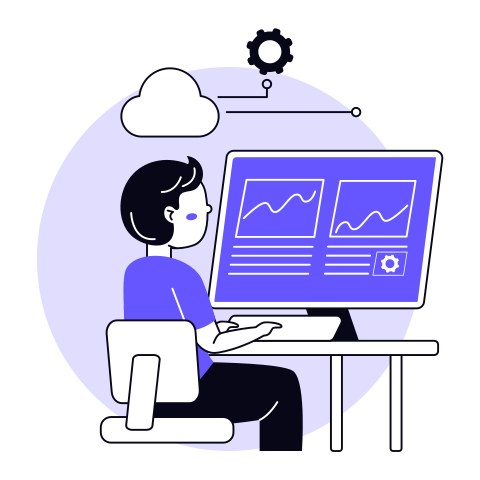
Illustration of an operations manager reviewing an asset register dashboard
  • Flexible Engagement Models
  • Strict NDA
  • 1 Week Risk Free Trial

The Engineering Partner You Can Build On

Reliable software requires an experienced team that owns delivery from discovery to release. Here is the track record behind ours.

7+

Years Building Custom Software

102+

Products Delivered Across Apps, Web & Software

90+

Experts On The Team

87+

Clients Served Across 17+ Countries

Trusted by Startups and Enterprises Worldwide

success speaks louder

Watch How We Make a Difference

Frame 01 / 04

Custom Software Solution Development / Driver Dashboard & Invoice Automation for Food Service Company

SolGuruz has delivered a solution that has reduced 90% of manual efforts through automation and provided real-time insights for supplier fulfillment and order volume trends. The team is responsive to requests and changes, and their proactive approach to problem-solving has stood out.

Summarized from Gary Boyd's Clutch review

Gary Boyd

CEO and Owner, Tasty Food Guys | Florida, USA

Read Clutch Verified Review
Tasty Food Guys

SolGuruz is Rated by Real People on Google and Clutch

SolGuruz Google Reviews
5.0

Rated 5.0 / 5 on Google by clients, partners, and visitors who have experienced SolGuruz first-hand - through our work, our office, or our team.

Read Google reviews →
SolGuruz Clutch Reviews
4.9

4.9 / 5 on Clutch - independently audited reviews from real clients who have shipped products with SolGuruz.

Read Clutch Reviews →

Backed by independent accreditations

Asset management software

What Is Asset Management Software?

Asset management software keeps one record for each asset across its lifecycle, covering serial number, location, custodian, condition, cost, warranty, service history, depreciation, and disposal. It answers what you own, where it is, who is responsible for it, and what it costs.

The value is in keeping that history connected, so an asset can move between departments, change sites, be serviced, and depreciate without becoming a new record each time. That connected record is what we build. SolGuruz develops custom asset management software for IT hardware, office equipment, vehicles, machinery, and other asset classes. It is shaped around how your business classifies and tracks what it owns, rather than forcing your assets into a product template.

What Suits Your Needs: ERP or Asset Management

This is the question most buyers ask next, and the answer changes what you should build.

ComparisonManagesHolds an asset asAnswers
ERPFinance, procurement, HR, operationsAn accounting entry with a book valueWhat did we spend and what is it worth
Asset Management SoftwareThe operational identity of each assetA living record with location, custodian, conditionWhere is it, who has it, how is it performing

An ERP consumes the financial information. Purchase cost, depreciation, book value, and disposal proceeds all flow into it. The asset system remains the operational source of truth for the asset itself. Businesses that run asset operations from the ERP alone end up with a technically correct valuation and an inventory nobody trusts.

Select Which Asset Management System You Need

Asset management software can mean very different things depending on what you need to track, control, and manage.

System typeThe question it answersRight fit when
Asset register and trackingWhat do we own and where is it?Audits take weeks, items go missing, records disagree
Fixed asset managementWhat is it worth on the books?Depreciation sits outside the operational system
IT asset managementWhat hardware and licenses do we hold?Endpoint counts and renewals outgrew the spreadsheet
Equipment and vehicle managementWho has it and how hard is it working?Items move between teams and nobody logs the handover
Multi-site asset visibilityWhat does the whole estate look like?Facility asset management software is needed across sites, because each one keeps its own list and head office reconciles monthly
Enterprise asset managementWhat does each asset cost across its life?Asset lifecycle management software is needed across several disconnected tools
Maintenance managementWhat work needs doing next?Breakdowns and repair scheduling are the real problem

The first six are what we cover on this page. If the last row describes your situation, our CMMS software development company page is the better fit.

Your Assets. Your Rules. Your System.

Tell us how assets move through your business, and we will turn those rules into working software.

Built for Every Role That Opens the System

Asset software gets abandoned when it is built for the buyer and handed to six other people. We design a distinct view per role during discovery.

Finance Controllers

Book value, depreciation schedules and disposal records ready to pull, without a parallel spreadsheet.

IT Managers

Hardware inventory, license positions and assignment records with refresh dates visible.

Operations Directors

Cost and utilization by category and site, in numbers that hold up in a budget conversation.

Facilities and Site Managers

Everything located in their area, with custody and condition current.

Procurement Leads

Warranty and contract dates, plus what is already idle before a new order is raised.

Internal Auditors

Variance reports, movement history and a full audit trail pulled without a records request.

OUR EXPERTISE

Our Asset Management Software Development Services

These are the asset management builds we deliver, from a first register through to a full multi-site platform. Nine services cover the full build, from the first data audit through to ongoing delivery. Most clients start with one and expand on the same architecture as coverage grows.

Core Modules Inside Your Asset Management System

Modules are scoped individually. You pay for the capabilities your business actually needs.

Acquisition and Onboarding

Purchase orders, supplier details, delivery confirmation, and cost are captured against the asset before it reaches a desk or site. The record starts when the asset enters the business, so nothing gets added later from memory.

Asset Register and Hierarchy

Asset register software gives every asset one record containing its identification, serial number, category, documents, and history, organized by entity, site, department, and location. Every other module reads from this record.

Identification and Tagging

Barcode and QR suit high-volume items, RFID supports bulk scanning and stock takes, GPS tracks mobile assets, and NFC supports tap-level identification for high-value equipment. RFID asset tracking software works well for businesses running frequent counts across large item numbers. We select the identification method according to the asset class and how your teams use it.

Custody, Location and Transfers

Track who holds an asset, where it sits, and every move it has made. Check-out, transfer, and return events record the person, date, location, and approval, creating a complete chain of custody across departments and sites.

Utilization Tracking

Track how often each asset is actually used, by site, team and period. Usage sits against the same record as cost, so a machine's output can be read against what it takes to keep it.

Warranty and Contract Management

Warranty periods, leases, service contracts, renewals and expiry dates carry alerts before they lapse. Teams can also see whether a repair or replacement falls under an existing agreement.

Total Cost of Ownership

Purchase price, operating costs, repair spend, and downtime roll up by asset and category. Asset lifecycle management software turns that into a keep, repair, replace or redeploy decision backed by numbers rather than budget-cycle guesswork.

Retirement and Disposal

Record the reason, date, residual value, disposal method, proceeds, and supporting evidence when an asset leaves service. The record is closed rather than deleted, preserving its history for future audits and reporting.

Reporting and Dashboards

Finance, operations and management each open a view built for their questions rather than one shared screen. Reports export to the formats your existing tools accept, so nobody rebuilds them in a spreadsheet.

Ready to Bring Your Assets Into One System?

Share your current process and we will map the right capabilities.

Capabilities Built Into Every Asset Management Build

Whichever modules you start with, these run underneath all of them.

Configurable Asset Categories

Different asset classes need different fields. You define categories and custom fields during discovery, so an IT laptop and a building fit-out each carry the right data without one template forcing both.

Teams, Roles and Access Control

Role-based access controls who sees and edits what, scoped per site and per entity where the structure requires it.

Bulk Import and Export

Existing spreadsheets load in with validation on the way through, and data leaves in a format your finance and reporting tools accept.

Alerts and Escalation Rules

Warranty expiry, overdue audits and unreturned assets escalate to the right person on rules you set, rather than sitting in a queue nobody checks.

API-First Architecture

Every module exposes clean APIs, so adding a site, a system or a data feed does not mean rebuilding what already works.

Audit Trail on Every Record

Each asset carries a dated history of who changed what, when, and from where. Movements, condition updates, valuation changes and disposals are appended rather than overwritten, so an auditor, an insurer or a finance review reads the same record your team works from.

How AI Works Inside Asset Management Software

AI belongs where it removes repeated manual work or surfaces something a person would not spot in a list of ten thousand rows.

Automated Asset Discovery

Network scanning finds IT hardware and installed software that never made it onto the register, which is usually a meaningful share of what a business actually owns.

Duplicate Detection and Register Cleanup

The same asset entered three times under three names gets matched and merged, which is the single biggest reason legacy registers cannot be trusted.

Utilization and Rightsizing Insights

Usage patterns across sites highlight where assets sit idle and where teams are short, so transfers happen before purchases do.

Cost Anomaly Detection

An asset whose running cost breaks from its own history gets flagged, which is often the first sign of a fault or a billing error.

Natural Language Asset Search

A question in plain English returns the answer from the register, built with AI development running on rules your team defines.

Replacement Timing Models

Cost curves and condition history project the point where keeping an asset costs more than replacing it, using machine learning development trained on your own records.

Integrate Your Asset Management System to Your Enterprise

Your asset management software should not work alone. It should connect with the other software and hardware your company already uses.

ERP and Finance

Get purchase cost, depreciation and financial information against every asset without a parallel reconciliation.

Procurement

When a company buys a new asset, it is created automatically in the asset register rather than added from memory later.

HR

Know which employee has which laptop, phone or equipment, so custody follows the person through joining, moving and leaving.

IT and Endpoint Tools

Automatically discover computers and other IT equipment, so the register reflects what is actually on the network.

Power BI and Tableau

Turn asset data into reports and dashboards in the tools your management team already opens.

Barcode, RFID and GPS Devices

Identify, scan and locate physical assets at the point of work rather than at a desk afterward.

Every connection is tested against a sandbox environment before anything is built on top of it. Integration depth is the single largest variable in cost. A system reading two sources and one reading eight are different projects, even when the screens look identical.

How We Build Your Asset Management Software

Asset management system development runs in five stages here, shaped around the fact that your assets stay in use while we build. Timelines shift with scope.

  1. 01 / 05

    Asset Data Audit and Classification (2-3 weeks)

    We find every place an asset is currently recorded, including the ones nobody admits to. Duplicates, missing categories and orphaned records get identified now, before they become the new system's problem.

    Deliverables: Current-state data report, asset classification model, cleanup plan
  2. 02 / 05

    System Scope and Architecture (2-3 weeks)

    Which system type you need, which modules make phase one, and how each connection will work. Integrations are proven against sandbox environments while changing the plan is still cheap.

    Deliverables: Module scope, architecture document, integration map, fixed estimate
  3. 03 / 05

    Role-Based Interface Design (2-4 weeks)

    Finance, IT, and site teams each need a different view of the same register. Our UI and UX design team designs per role and tests with real users before production code starts.

    Deliverables: Wireframes, clickable prototype, approved role workflows
  4. 04 / 05

    Sprint Build and Integration (8-16 weeks)

    Two-week sprints with working software at the end of each. Register and tagging first, then finance and reporting layers, then anything predictive. An engineer reviews every file before merge.

    Deliverables: Functional modules per sprint, sprint demos, integration test results
  5. 05 / 05

    Register Migration and Staged Rollout

    Existing records are cleaned and validated before they move, then we go live by site, entity, or asset class. Application maintenance and support continues afterwards as sprint capacity rather than a ticket queue.

    Deliverables: Migration validation report, deployed system, module roadmap, year one support plan

How we engineer

Our AI-Native Engineering Standards

AI-native by practice, engineer-led by principle. These are the rules every SolGuruz team works to, on every project, whatever the stack or industry.

  1. 01Architecture and Design Quality

    • Spec-Driven Requirements

      Every feature has written acceptance criteria and a traceable spec before development starts, and AI checks the spec for gaps, conflicts, and missing edge cases.

      Engineer-ledEngineers review every spec for feasibility before it’s estimated.

    • Architecture Standards

      Architecture, data model, state management, and integrations follow proven patterns for scale, security, and maintainability, and every key decision is documented.

      Engineer-ledAn engineer signs off every architecture decision.

    • Design System and Accessibility

      Every screen is built from a shared design system in Figma, with AI-assisted accessibility checks and design-to-code handoff.

      Engineer-ledDesigners own every design decision and its consistency across devices.

  2. 02Code Quality and Security

    • AI-Assisted Development, Human-Owned Code

      Developers use Claude Code, GitHub Copilot, and Cursor for scaffolding, boilerplate, and repetitive patterns, never for unreviewed logic.

      Engineer-ledEngineers own the logic and review every AI-generated change.

    • Coding Standards, Git Flow and Peer Review

      Code follows agreed conventions and a Git Flow branching model, and AI-assisted review flags issues on every commit.

      Engineer-ledA second developer reviews every change before it merges.

    • Secure and Compliant by Default

      ISO 27001 and ISO 9001 certified processes, SOC 2-aligned controls, least-privilege access, and encryption in transit and at rest, with HIPAA-aligned safeguards where health data is involved.

      Engineer-ledAn engineer owns every security review.

  3. 03Testing and Release Safety

    • AI-Generated Tests and Manual QA

      AI generates unit tests, edge cases, and regression suites from the codebase, and automated suites run on every build.

      Engineer-ledQA engineers test the real user flows by hand before every release.

    • Static Analysis and CI/CD Pipelines

      Static code analysis scans every commit, and CI/CD pipelines build, test, and deploy across development, staging, and production.

      Engineer-ledEngineers set the quality gates the pipeline enforces and fix what the scans flag.

    • Release Safety

      Every release has staged environments, a tested rollback plan, and alpha and beta builds for internal and external users before full rollout.

      Engineer-ledEngineers review release metrics before each rollout phase.

  4. 04Reliability and Ownership

    • Observability

      Crash reporting, performance monitoring, and usage analytics are live from launch day, with alerts routed to the team that built the product.

      Engineer-ledEngineers act on every alert and track trends for the life of the product.

    • Data-Driven Iteration

      Product analytics are instrumented from launch, and new features are prioritized from user feedback and data, not guesswork. For clients without an in-house marketing team, we also run the growth strategy.

      Engineer-ledEngineers turn analytics into the backlog for each release.

    • Documentation, Ownership and Ongoing Support

      AI keeps API references and technical docs in sync with the code, and maintenance plans keep the product secure and up to date.

      Engineer-ledYou get full repository access and IP ownership, and one in-house team stays accountable for the outcome.

What Does Asset Management Software Development Cost?

Scope drives the number more than anything else. Here is where most builds land.

Build tierWhat it coversCost range
Core register and trackingAsset register, tagging, custody, mobile scanning, reporting$15,000 - $30,000
Multi-site with integrationsAdds depreciation, contracts, ITAM, finance and procurement connections$30,000 - $75,000
Full lifecycle platformComplete asset life, utilization and cost models, deep integrations, audit architecture$75,000+

Custom asset management software with SolGuruz starts at $15,000. You scope the modules your business needs and pay for those, with more added to the same architecture later. Teams that would rather run the build in-house can hire dedicated developers from the same team instead.

Sitting outside these ranges: tagging hardware, scanners, RFID readers, cloud hosting and post-launch support. We quote those separately so nothing hides inside one figure. Every engagement opens with a discovery phase producing a fixed-scope estimate. You approve the number before code gets written.

Know What Your Asset System Will Cost Before You Build

Share your asset base, sites and current tools, and we will come back with a range you can take into a budget meeting.

The Technology Behind Your Asset Management System

We build on frameworks that stay fast with large registers and heavy scan volume.

Tracking and Field Hardware

  • Barcode and QR scanners
  • RFID readers
  • NFC tags
  • GPS units
  • Rugged mobile devices

Industries We Build Asset Management Software For

Every industry manages different assets, operates across different environments, and follows different control processes. We build asset management software around those specific requirements, from office hardware and medical devices through to vehicles and production machinery.

  • Logistics and Fleet

    Fleet asset management software manages vehicles, trailers, forklifts and depot equipment across distribution locations. Where those vehicles also need live GPS tracking, driver apps and telematics, fleet management software development covers the day-to-day running side. Track ownership, custody, transfers and running cost for each unit as it moves between depots. Operations that also need dispatch, warehouse and delivery execution are covered by our logistics software development services.
  • Mining

    Manage heavy equipment across pits, processing areas and remote sites where connectivity drops. Track condition, usage, operating cost and compliance evidence against each machine, with records that hold up under inspection. Usage-based schedules replace calendar dates, so servicing follows what a machine actually did.

  • Healthcare and Medical Facilities

    Track medical devices, diagnostic equipment, and other critical assets across departments and facilities. Manage location, custody, condition, calibration records, warranties, and asset history from one system. Our healthcare software development expertise supports the wider operational workflows around these assets.

  • Real Estate

    Facility asset management software manages building systems, equipment, fixtures and fit-outs across individual properties and locations. Track ownership, condition, value, service records and lifecycle costs for every asset. Connect asset records with property management software development when tenant and property workflows need to work together.

  • Education

    Track laptops, laboratory equipment, classroom technology, furniture, and other institutional assets across campuses. Manage assignments, locations, condition, transfers, and returns as students and staff change. Keep a complete asset history across departments and academic years.

  • Fintech and Financial Services

    Regulated finance teams carry an asset base that auditors ask about by name: trading terminals, secure workstations, card and PIN devices, server estate and the software licenses attached to each. Asset management software holds custody, location and control ownership against every item. Depreciation and lease schedules feed the finance system rather than a parallel spreadsheet.

  • Manufacturing

    Track production machinery, tooling, moulds, jigs and factory floor equipment across facilities. Manage location, condition, assignment and cost by production line or cell. Give operations teams clear visibility into what is available and what each machine costs to run.

  • Construction

    Manage power tools, small plant, scaffolding, formwork and site equipment moving between projects. Track custody, transfers and hire cost so items charged to one job do not disappear on the next. Keep records current as equipment changes hands on site.

  • Professional Services and SaaS

    Manage laptops, monitors, mobile devices, networking equipment and software licenses across distributed teams. Track assignments, locations, warranties, refresh cycles and returns throughout the employee lifecycle. Connect asset records with your directory and HR systems so custody follows the person.

Why Teams Choose SolGuruz for Asset Management Software Development

We do more than build an asset database. We build a reliable asset management system that finance, IT, and operations teams can use every day, with the right data, workflows, and visibility from day one.

  • We Get Your Asset Structure Right First

    Your asset structure affects every report, workflow, cost calculation, and access rule. We define how assets are classified, grouped by site or entity, and assigned to teams before development begins. We take this groundwork seriously, and our client relationships reflect it: 80% of our clients come back, while 70% refer us to others.
  • One Register for All Your Assets

    No more separate spreadsheets for finance, IT, operations, or individual sites. We bring equipment, vehicles, IT hardware, and other assets into one system, with the right information for each asset type. Everyone works from the same reliable record.
  • Built for Finance and Operations

    Finance needs depreciation, book value, and asset costs. Operations needs location, condition, custody, and usage. We design the system around both needs, so every team works from the same asset record without maintaining separate systems.
  • Records That Survive an Audit

    Asset data ends up in front of auditors, insurers and finance teams. Every change carries an owner and a timestamp, so any figure can be traced back to who set it and when. Delivery runs on ISO 27001:2022 and ISO 9001:2015 certified processes.
  • You See Working Software Every Sprint

    Two-week sprints with a demo at the end of each, so you watch the register take shape rather than waiting for a launch date. Modules get added as coverage grows, backed by a 99.9% delivery rate.
  • You Own the Software

    There are no per-asset software license fees that increase as your asset base grows. You own the code, data, and deployment, giving you full control over the system as your business expands.
  • Your Existing Asset Data Comes With You

    Replacing an old system should not mean losing years of asset history. We clean, validate, and migrate your existing records, then support a controlled rollout. 7+ years of custom builds sit behind that process, and clients rate us 4.9 on Clutch from independently audited reviews.
See What Your Custom Build Could Look Like

Share your asset base and we will outline the right approach.

From Our Portfolio

Asset and Operations Software We Have Built

SolGuruz has shipped 102+ products across 14 industries. See how our team built systems where the asset record sat at the center. They run from property and facility platforms to maintenance management and a B2B trading marketplace with ERP inventory sync.

  • Property Management Software Solutions

    Property Management Software Solutions

    We built a custom property platform with CRM-style tenant management, maintenance requests, automated rent collection, and financial reporting across role-based panels.

    Key Outcomes

    12-14 Week
    Delivery Timeline
    15-20 hrs
    Rent Reconciliation Saved
    3 Portals
    Tenant, Landlord, Admin
    5 Layers
    Security: Encryption to Rollback
  • HotelGuruz: CMMS Software Delivered in 45 Days - Live on App Store & Google Play

    HotelGuruz: CMMS Software Delivered in 45 Days - Live on App Store & Google Play

    HotelGuruz Redefines Hotel Operations with a CMMS Solution that Simplifies Maintenance, Asset Management, Reduces Costs & Unites Hotel Teams under One Centralized Platform.

    Key Outcomes

    45-Day
    Delivery Timeline
    $180-$350
    Saved Per Room / Year
    iOS + Android
    Native Apps
    Hospitality
    CMMS Platform
  • Diamond B2B Portal and Diamond CRM Development

    B2B Diamond CRM Portal With ERP Synchronisation

    Gem is a B2B diamond trading portal with inventory sync to client ERP systems, 4 platforms (web, mobile, backend, cloud), and enterprise security.

    Key Outcomes

    6+ Month
    Delivery Timeline
    4 Platforms
    Web, Mobile, Backend, Cloud
    ERP Sync
    Inventory Synced with Client ERP
    B2B
    Diamond Trading

What Our Clients Say

Explore the latest reviews from our existing clients to get a better picture of our services and collaboration.

Top Clutch Software Developers - Real Estate, Ahmedabad
Clutch Fall Champion 2024
Clutch Global Award Fall 2024
Top Clutch Nextjs Developer 2023 Award
Most Reviewed App Development Company
Real estate

Web Design, Mobile App Development of Real Estate Platform for Real Estate Company

SolGuruz has delivered a functional, error-free platform that aligns with the client's needs and requirements, meeting expectations. They ensure a smooth process through their effective communication, responsiveness, proactive problem-solving, and streamlined, transparent development process.

Chirag Balani

Summarized from Chirag Balani's Clutch review

Chirag Balani, General Manager, Property Dollar

AustraliaSydney, Australia

Oct. 2021 - Ongoing
Food & Beverage

Web & Mobile App Dev for Online Food and Grocery Platform

SolGuruz successfully delivered a reliable and robust system with an easy operating experience. The team fulfilled all the client's expectations and delivered the project on time. Their active involvement in the project and effective communication via virtual meetings were hallmarks of their work.

Kastriot Shatri review for SolGuruz

Summarized from Kastriot Shatri's Clutch review

Kastriot Shatri, CEO, Kas Foods Solution Group Kft

Budapest, HungaryBudapest, Hungary

Sep. 2023 - Mar. 2025
Diamond & Jewelry

Custom Software Development, Design and App Development for B2B Diamond Platform

Since partnering with SolGuruz, the client has gained an all-encompassing solution to provide their customers. The team accomplishes their goals with agility, and internal stakeholders are particularly impressed with the vendor's comprehensive approach to support and maintenance.

Kalpesh review for SolGuruz

Summarized from Kalpesh Zalavadiya's Clutch review

Kalpesh Zalavadiya, Managing Director, DiamNow

IndiaSurat, India

Nov. 2021 - Ongoing
Ready to Build Your Asset Management System?

Replace disconnected records and manual tracking with one system built around your assets, teams, and workflows.

Related Operational Systems

Asset records rarely live in one system. Explore the connected operational software our team builds.

You are hereAsset Management Software Development

Frequently Asked Questions

Quick answers to the questions our clients and prospects ask most. If yours is not here, our team is one click away.

Jay Nandwana Technical Business Consultant at SolGuruz

Jay NandwanaSenior Technical Business Consultant

Need advice tailored to your project?

FAQs cover the common ground. For decisions specific to your tech stack, timeline, and team, talk to Jay and the team, who have shipped what you are planning.

It is the process of building a custom system that holds one record per asset and tracks it across its full life. That record covers identification, location, custody, condition, cost, depreciation and disposal, shaped around your own asset structure.

An ERP manages finance, procurement, HR and operations broadly, holding assets as accounting entries. Asset management software manages the operational identity of each asset. The ERP consumes the financial data while the asset system stays the operational source of truth.

Enterprise asset management (EAM) software extends a register across multiple sites, entities and departments, covering acquisition, utilization, cost and retirement in one place. We add those capabilities where an operation needs full lifecycle visibility rather than a single-site register.

EAM answers what happened to an asset across its life. A CMMS answers what work needs doing next. The asset record holds the service history while the CMMS schedules and completes the work that creates it.

APM, asset performance management, watches condition and predicts failure on a small number of critical assets, so it sits on top of the asset record rather than replacing it. IWMS, integrated workplace management, covers buildings, space and leases, which is a property question rather than an asset one. Most teams asking about either actually need a clean asset register first, because both read from it.

No. Asset tracking software usually starts with high-value items and anything that moves between people or sites. Low-value fixed items can enter the register without a physical tag and be added later.

Yes. Fixed asset management software runs straight-line, reducing balance and usage-based methods against each asset, with book value, revaluation and disposal proceeds available to finance without a separate list.

IT asset management software tracks hardware inventory, license positions and refresh planning. Hardware asset management runs in the same register as physical assets, so laptops and lab equipment are managed together rather than in parallel tools.

The first count against the new asset register software surfaces them. Items get added with a reason code showing they were found rather than purchased, so the variance is explained rather than hidden.

There is no fixed number. The trigger is usually per-asset licensing passing the cost of a build within two to three years, or an asset structure a product cannot hold without workarounds.

A core register with tracking takes 2 to 3 months. Multi-site builds with integrations take 4 to 6 months. Full platforms run 7 to 10 months from data audit through rollout.

Yes. Multi-site asset tracking keeps every site in one register with transfers logged between them. Access is scoped per site, so each team sees its own assets while the head office sees the whole estate.