







SolGuruz Logo
Pricing

Supply Chain Software Development

Supply chain software for teams that plan, buy, and hold stock across many suppliers and sites.

Build custom supply chain software that puts demand plans, purchase orders, and supplier updates in one place. Your planners see what is coming, what is late, and where stock should sit before a shortage hits.

SolGuruz delivers supply chain software development services built around how your network runs. That includes planning engines, supplier portals, procurement workflows, and ERP connections.
Talk to a Supply Chain Software Engineer
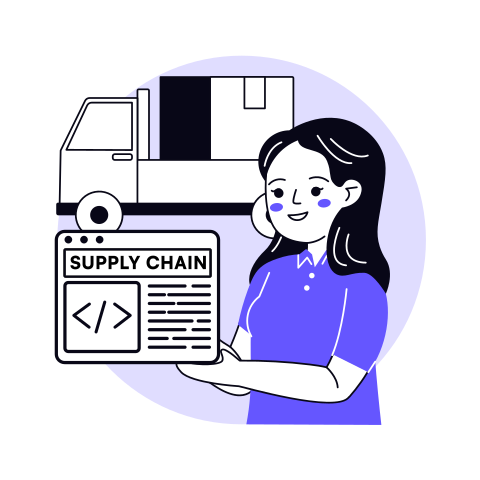
Illustration of a person holding a supply chain software screen in front of a delivery truck
  • Flexible Engagement Models
  • Strict NDA
  • 1 Week Risk Free Trial

The Engineering Partner You Can Build On

Reliable software takes an experienced team that owns delivery end to end. Here's the track record behind ours.

7+

Years Building Custom Software

90+

Dedicated Team Members

102+

Products Shipped

87+

Clients Served Across 17+ Countries

Trusted by Startups and Enterprises Worldwide

success speaks louder

Watch How We Make a Difference

Frame 01 / 04

Custom Software Solution Development / Driver Dashboard & Invoice Automation for Food Service Company

SolGuruz has delivered a solution that has reduced 90% of manual efforts through automation and provided real-time insights for supplier fulfillment and order volume trends. The team is responsive to requests and changes, and their proactive approach to problem-solving has stood out.

Summarized from Gary Boyd's Clutch review

Gary Boyd

CEO and Owner, Tasty Food Guys | Florida, USA

Read Clutch Verified Review
Tasty Food Guys

SolGuruz is Rated by Real People on Google and Clutch

SolGuruz Google Reviews
5.0

Rated 5.0 / 5 on Google by clients, partners, and visitors who have experienced SolGuruz first-hand - through our work, our office, or our team.

Read Google reviews →
SolGuruz Clutch Reviews
4.9

4.9 / 5 on Clutch - independently audited reviews from real clients who have shipped products with SolGuruz.

Read Clutch Reviews →

Backed by independent accreditations

Illustration of connected supplier, warehouse and delivery points in a supply chain network

What Is Supply Chain Software?

Supply chain software is the system a business uses to plan demand, buy from suppliers, and place stock across its network. It links forecasts, purchase orders, supplier updates, and inventory in one record. As a result, planners and buyers work from the same numbers instead of separate spreadsheets.

Logistics software moves and stores goods. Supply chain software decides what to buy, how much, from whom, and where it should go before any truck is booked. Supply chain management software development shapes that planning layer around your own suppliers, lead times, and product rules instead of a vendor's default settings.

As a logistics software development company, we connect this planning layer to the warehouse, transport, and fleet systems that carry out each plan. Approved orders and stock targets flow downstream, and real receipts and delays flow back up.

Demand for this layer is growing fast. The supply chain management software market is estimated at USD 36.39 billion in 2026 and is forecast to reach USD 56.01 billion by 2031, according to Mordor Intelligence.

Supply Chain Software vs Logistics Software vs ERP: Which One Solves Your Problem?

Buyers often compare these three because each one touches inventory. They answer different questions, and most growing businesses need all three working together.

QuestionSupply chain softwareLogistics softwareERP
Main jobPlan demand, buy, and position stockMove, store, and deliver goodsRecord finance, orders, and stock value
Time horizonWeeks to months aheadToday and this weekThe past and current period
Who uses it dailyPlanners, buyers, and suppliersDispatchers, drivers, and warehouse staffFinance, sales, and admin teams
Choose it whenShortages, excess stock, or late suppliers are the problemFreight cost or warehouse accuracy is the problemBooks, invoicing, and approvals are the problem

Most businesses keep the ERP as the financial record for stock value and invoices. Most then add supply chain software for planning and supplier work, while logistics systems handle the physical movement, and data passes between all three through APIs.

Which Supply Chain Metrics Does Custom Software Improve?

Leaders rarely buy supply chain software for its screens. They buy it to move a handful of numbers that finance and customers already watch.

MetricWhat it tells youHow the software moves it
Forecast accuracyHow close the demand plan was to real salesLearns from your own sales, promotions, and seasonality, then lets planners correct for known events
On-time in-full (OTIF)How many customer orders shipped complete and on timeFlags shortages weeks ahead, so buyers fix them before orders are due
Days of inventoryHow long current stock will last at today's salesSets stock targets per product and site, so cash is not tied up in slow items
Supplier on-time rateHow often suppliers deliver what they confirmedTracks every confirmation against the actual receipt and scores each supplier
Purchase order cycle timeHow long it takes to go from request to approved orderMoves quotes, approvals, and order sending into one flow
Expedite spendHow much you pay for rush freight and premium buysCatches late supply early, while normal freight and normal prices still work

Pick two of these numbers before you build anything. They decide which module goes first, and they give you a fair way to judge the software six months after launch.

Supplier on-time rate and expedite spend often move first. Both depend on supplier updates reaching the plan on time, rather than on a better forecast model.

is it time

When Do You Need Custom Supply Chain Software?

Enterprise suites like SAP IBP, Oracle, Kinaxis, and Blue Yonder suit large companies with standard processes. A custom build makes sense when your rules, suppliers, or budget do not fit those products.

Your Plan Lives in Spreadsheets Nobody Trusts

If each planner keeps their own file, the company runs on several versions of the truth. One shared planning system ends the weekly argument about whose number is right.

Suppliers Send Updates by Email and PDF

When confirmations, ship dates, and price changes arrive as attachments, buyers spend their day retyping. Most of those updates never reach the plan in time.

Your ERP Planning Module Cannot Hold Your Rules

Shelf life, customer allocations, and substitute parts often sit outside what a standard ERP module can model. Teams then plan outside the system and key results back in.

Enterprise Suite Licenses Cost More Than the Problem

A mid-size manufacturer or brand rarely needs every module in a large suite. Paying for a full suite to fix two planning gaps is a common and expensive mistake.

Buyers and Customers Ask for Proof of Origin

Retailers, regulators, and enterprise customers now ask where materials came from. If that proof lives in inboxes, every request becomes a small project.

Stock Piles Up in One Site While Another Runs Out

When each warehouse plans separately, one may have too much stock while another runs out. A shared plan moves stock where it is needed before you have to pay for rush shipping.

If these issues sound familiar, a custom supply chain system can bring your planning, supplier data, and tracking into one place.

Custom Build vs Enterprise Suite: A Quick Comparison

Both paths can work, but they cost you in different ways over time. This table shows where the money goes and who controls the system after launch.

FactorEnterprise suite (SAP IBP, Kinaxis, Blue Yonder)Custom supply chain software
How you payYearly subscription plus implementation partner feesOne-time build priced by module, then hosting and support
What grows the billMore users, modules, and sitesMore modules or integrations you choose to add
Fit to your rulesYou adjust your process to match the productThe software follows your existing rules
Modules you getUsually a bundle, used or notOnly the modules you need
Who owns the roadmapThe vendorYou, along with the code and data

Most mid-size businesses end up in the middle. They keep their ERP, skip the full suite, and build only the modules where their rules differ.

Not sure yet? Our AI PoC development work can test a forecast on a sample of your sales history first. The gap between that forecast and your current plan shows whether a full build will pay back.

Planning From Spreadsheets Again This Month?

Tell us where your plan breaks, and we'll show what to build first.

Why Supplier Data Breaks Before It Reaches Your Plan

Most planning errors start with supplier data, not the forecast. Each supplier sends updates in its own format and on its own schedule.

Supplier signalHow it usually arrivesWhat goes wrong
Order confirmationEmail, PDF, or EDI 855Confirmed quantities and dates never reach the plan
Advance ship noticeEDI 856, spreadsheet, or a phone callReceiving teams cannot prepare for what is coming
Lead time changeA line in an emailSafety stock stays based on the old number
Price changeA new PDF quotePurchase order cost and invoice cost stop matching
Certificates and auditsEmail attachmentsExpired documents surface during an audit
Capacity warningA phone call to one buyerThe rest of the team finds out after the shortage

Here is what most vendors will not say upfront: the forecast model is rarely the real problem. A simple model fed with fresh supplier dates usually beats an advanced model fed with stale ones.

That is why we fix supplier data flow first. A supplier portal, EDI connections, and document reading clear most of the rows above. Advanced planning features come after that.

our expertise

Supply Chain Software Development Services We Deliver

Most teams begin with the module behind their biggest shortage or rework problem. Others build the full platform in phases.

Start With the Decision That Costs You Most

Tell us which planning call goes wrong most often, and we'll scope that module.

industries we serve

Industries We Build Supply Chain Software For

Every industry plans around a different constraint. Here is how the software handles each one.

  • Manufacturing and Industrial

    Manufacturers need material plans that follow production schedules and bill of materials changes. Alongside our ERP implementation services, work orders, material needs, and lead times come from one source. Substitute part rules then keep a single late component from stopping a line.
  • Consumer Goods and FMCG

    Consumer goods brands plan around promotions, retailer orders, and co-manufacturers. Through AI integration services, promotion forecasts run on retailer sell-through, not shipment history alone. Co-packers see confirmed production plans, so capacity is booked before a promotion starts.
  • Retail and Ecommerce

    Retailers and online brands split stock across distribution centers, stores, and marketplaces. Our mobile app development team gives store managers a simple app to approve stock transfers. Allocation rules and open-to-buy tracking help buyers spend on what will actually sell.
  • Food and Beverage

    Food and beverage businesses plan around shelf life, seasonal harvests, and supplier certificates. Forecasts account for expiry dates, so buying plans do not order more than can be sold in time. Certificate renewal alerts also stop an expired audit from holding up a purchase order.

  • Pharmaceutical and Healthcare

    Pharmaceutical companies and medical suppliers need approved backup suppliers and full records for every lot. Our healthcare software development teams build supplier qualification, lot genealogy, and shortage alerts. Buyers can see which items have only one qualified supplier and start dual sourcing early.
  • Automotive and Industrial Parts

    Automotive parts suppliers work to OEM delivery schedules across several supplier tiers. We build EDI-driven release planning, sub-tier supplier tracking, and just-in-time buying rules. When a tier-two supplier slips, the plan shows which customer releases are at risk.

  • Electronics and High-Tech

    Electronics companies face component shortages, supplier allocations, and lead times that stretch for months. The software tracks parts across approved suppliers and suggests approved alternates. It also records conflict mineral declarations for every part.

  • Distribution and Wholesale

    Distributors buy from hundreds of vendors and resell to trade customers with their own buying patterns. When trade accounts live in a custom B2B CRM, their order patterns feed the forecast directly. Supplier scorecards then show which vendors keep their promises.
  • Diamond, Jewelry, and High-Value Goods

    Diamond and jewelry traders source stones and finished pieces from many suppliers, often on memo or consignment. We build supplier stock feeds, memo tracking, and grading records for every item. Our B2B diamond trading portal already syncs live inventory with client ERP systems. Kimberley Process and origin records stay attached to each stone, so sourcing questions get quick answers.

Supply Chain Integration: Systems and Partners We Connect

A plan is only as good as the data feeding it. Your supply chain software has to read from and write to the systems you already run.

ConnectionSystems we work withWhat it changes
ERP and financeSAP S/4HANA, Oracle NetSuite, Microsoft Dynamics 365, Infor, OdooApproved plans become purchase orders without re-entry
Supplier EDI850, 855, 856, 810, and 846 transaction setsOrders, confirmations, ship notices, and invoices move automatically
Manufacturing systemsMES, PLM, and bill of materials dataMaterial plans follow real production schedules
Demand signalsShopify, Amazon, POS feeds, and retailer EDI 852Forecasts use actual sell-through, not just shipments
Logistics executionWMS, TMS, 3PL systems, and carrier visibility toolsReceipts and inbound delays update the plan the same day
Data and reportingSnowflake, Databricks, Power BI, TableauLeaders see plan versus actual in the tools they already use

Approved orders flow into warehouse management system development and transportation management system development builds, so the plan and the physical movement stay in step.

Our ERP and CRM integration team can also pull customer orders from your CRM. Sales commitments then reach the demand plan before they turn into rush orders.

Not Sure Which Systems to Connect First?

Share your ERP and top suppliers, and we'll map the order.

Traceability and Sourcing Compliance Your Software Should Handle

Sourcing rules now ask companies to prove where materials came from and how suppliers operate. Your supply chain software should keep that proof as part of daily buying, not as a yearly scramble.

RequirementWhat the software recordsWho it applies to
UFLPA (US)Supplier and sub-tier origin records for goods and materialsUS importers, especially of cotton, polysilicon, aluminum, and seafood
EU CSRD and Scope 3 reportingSupplier emissions and activity data linked to purchasesCompanies in CSRD scope and the suppliers reporting to them
EU Deforestation Regulation (EUDR)Origin plot locations and due diligence statementsEU importers of cattle, cocoa, coffee, palm oil, rubber, soy, and wood
Dodd-Frank Section 1502Smelter and supplier declarations for conflict mineralsUS-listed companies using tin, tantalum, tungsten, or gold
Germany's Supply Chain Act (LkSG)Supplier risk reviews and complaint recordsLarger companies operating in Germany
SOC 2 and data privacySupplier access controls, activity logs, and data separationBusinesses serving enterprise buyers

Scope and deadlines for several of these rules have shifted recently. Discovery maps which ones apply to your products and markets today, so you build only what you need.

What Should You Prepare Before Building Supply Chain Software?

You do not need perfect data to start. You do need to know what you have, so discovery can plan around the gaps.

What to have readyWhy it mattersIf it is missing
12 to 24 months of sales and order historyTrains and tests the forecastWe start with what exists and backtest on a shorter window
Item master with units and pack sizesEvery plan and purchase order depends on itWe clean it during data mapping, before any planning logic is built
Supplier list with lead times and update formatsShows which suppliers need a portal, EDI, or email readingWe audit your top 20 suppliers first
ERP access and API detailsDecides how approved plans become purchase ordersWe use a file-based connection until APIs are ready
Two target metricsSets the first module and the test for successWe choose them with you from the metrics table above
One named planning ownerSomeone must approve rules and overridesWe help you define the role before the build starts

A named owner matters more than clean data. Data can be fixed during discovery, but unclear ownership slows down every stage after it.

how we work

How We Build Your Supply Chain Software

Five stages, with the plan tested against your own history before a single supplier logs in. The durations below reflect a focused module, and larger platforms add time at Stages 3 and 4.

  1. 01 / 05

    Planning and Supplier Discovery (2-3 weeks)

    We sit with planners, buyers, and finance to map how plans get made today. That includes the spreadsheets nobody mentions in the first meeting. We also review your top suppliers and trace where last year's shortages started.

    Deliverables: Current planning workflow map, supplier data audit, shortage root-cause list, first-module recommendation, and a fixed-scope quote.

  2. 02 / 05

    Data Cleanup and Integration Mapping (1-2 weeks, alongside Stage 1)

    We check item masters, units of measure, and supplier lead times against what the plan will need, because a forecast inherits every error in the data feeding it. Then we map every ERP, EDI, and sales channel connection. Finally, we design the data model around your products and sites.

    Deliverables: Clean item and supplier master, connection blueprint, EDI transaction list, and data model design.

  3. 03 / 05

    Planning and Procurement Core Build (7-9 weeks)

    We build forecasting, supply planning, and purchase order workflows first, because every other feature depends on them. Our AI-assisted software development process speeds up repetitive code. A senior engineer still reviews every file before it merges.

    Deliverables: Working planning and procurement modules, a live ERP link, and first supplier EDI feeds in staging.

  4. 04 / 05

    Backtest, Supplier Pilot, and AI Features (3-4 weeks)

    We run the new plan against your real history and compare it with what actually happened. Once the numbers hold up, a small group of suppliers joins the portal. AI features then go live for that pilot group.

    Deliverables: Backtest results, supplier pilot feedback, trained models, and a wave-by-wave rollout plan.

  5. 05 / 05

    Product-Family Rollout and Support (ongoing)

    Product families and suppliers move over in waves, so buying never stops during the switch. After launch, our application maintenance and support team tracks forecast accuracy. They also keep supplier feeds healthy and add modules as your network grows.

    Deliverables: Wave schedule, planner and buyer training, forecast accuracy dashboard, and ongoing support plan.

How we engineer

Our AI-Native Engineering Standards

AI-native by practice, engineer-led by principle. These are the rules every SolGuruz team works to, on every project, whatever the stack or industry.

  1. 01Architecture and Design Quality

    • Spec-Driven Requirements

      Every feature has written acceptance criteria and a traceable spec before development starts, and AI checks the spec for gaps, conflicts, and missing edge cases.

      Engineer-ledEngineers review every spec for feasibility before it’s estimated.

    • Architecture Standards

      Architecture, data model, state management, and integrations follow proven patterns for scale, security, and maintainability, and every key decision is documented.

      Engineer-ledAn engineer signs off every architecture decision.

    • Design System and Accessibility

      Every screen is built from a shared design system in Figma, with AI-assisted accessibility checks and design-to-code handoff.

      Engineer-ledDesigners own every design decision and its consistency across devices.

  2. 02Code Quality and Security

    • AI-Assisted Development, Human-Owned Code

      Developers use Claude Code, GitHub Copilot, and Cursor for scaffolding, boilerplate, and repetitive patterns, never for unreviewed logic.

      Engineer-ledEngineers own the logic and review every AI-generated change.

    • Coding Standards, Git Flow and Peer Review

      Code follows agreed conventions and a Git Flow branching model, and AI-assisted review flags issues on every commit.

      Engineer-ledA second developer reviews every change before it merges.

    • Secure and Compliant by Default

      ISO 27001 and ISO 9001 certified processes, SOC 2-aligned controls, least-privilege access, and encryption in transit and at rest, with HIPAA-aligned safeguards where health data is involved.

      Engineer-ledAn engineer owns every security review.

  3. 03Testing and Release Safety

    • AI-Generated Tests and Manual QA

      AI generates unit tests, edge cases, and regression suites from the codebase, and automated suites run on every build.

      Engineer-ledQA engineers test the real user flows by hand before every release.

    • Static Analysis and CI/CD Pipelines

      Static code analysis scans every commit, and CI/CD pipelines build, test, and deploy across development, staging, and production.

      Engineer-ledEngineers set the quality gates the pipeline enforces and fix what the scans flag.

    • Release Safety

      Every release has staged environments, a tested rollback plan, and alpha and beta builds for internal and external users before full rollout.

      Engineer-ledEngineers review release metrics before each rollout phase.

  4. 04Reliability and Ownership

    • Observability

      Crash reporting, performance monitoring, and usage analytics are live from launch day, with alerts routed to the team that built the product.

      Engineer-ledEngineers act on every alert and track trends for the life of the product.

    • Data-Driven Iteration

      Product analytics are instrumented from launch, and new features are prioritized from user feedback and data, not guesswork. For clients without an in-house marketing team, we also run the growth strategy.

      Engineer-ledEngineers turn analytics into the backlog for each release.

    • Documentation, Ownership and Ongoing Support

      AI keeps API references and technical docs in sync with the code, and maintenance plans keep the product secure and up to date.

      Engineer-ledYou get full repository access and IP ownership, and one in-house team stays accountable for the outcome.

What Does Supply Chain Software Development Cost?

Supply chain software development costs $20,000 to $50,000+, and most builds go live in 12 to 20+ weeks. Three things set your budget: the modules you need, the suppliers and systems you connect, and the state of your master data.

Build typeWhat it coversTimelineInvestment
Focused moduleOne planning, procurement, or visibility module with one or two integrations12-16 weeks$20,000-$35,000
Multi-module platformPlanning, procurement, supplier portal, ERP connection, and supplier EDI16-20 weeks$35,000-$45,000
Enterprise supply chain platformAdds multi-tier visibility, AI planning agents, traceability, and several business units20+ weeks$50,000+

The longer timelines come from two stages of our build process: the core build and the backtest. A multi-module platform adds supplier EDI connections and a second planning horizon to the core build, and an enterprise platform adds multi-tier visibility and traceability on top, which extends both the build and the backtest.

Your final price is set during discovery, based on your real supplier list, systems, and data condition.

Supplier connections and data cleanup move the budget more than the number of screens. Connecting five suppliers through a portal is a different project from connecting fifty through EDI.

Know Your Budget Before the Board Asks

Send your supplier count and ERP, and we'll return a fixed-scope estimate.

Technologies Behind Your Supply Chain Software

  • Claude Code
  • GitHub Copilot
  • Cursor
  • Windsurf
  • v0
  • Gemini
  • Codex
  • Banani
  • Figma Make
  • Uizard
  • Pencil Dev
  • Stitch
  • Kiro
  • Antigravity
  • User-doc
  • Miro AI
  • Whimsical AI
  • Flutter
  • Android
  • Apple
  • React Native
  • TypeScript
  • JavaScript
  • ReactJs
  • Electron
  • Angular
  • WordPress
  • Webflow
  • FlutterFlow
  • Java
  • PHP
  • Node.js
  • Python
  • Laravel
  • Django
  • FastAPI
  • Flask
  • Nestjs
  • Feathersjs
  • Strapi
  • Netlify
  • Contentful
  • Storyblok
  • Butter CMS
  • Directus
  • TensorFlow
  • PyTorch
  • OpenCV
  • Hugging Face
  • Kaggle
  • OpenAI
  • Anthropic
  • Ollama
  • Claude
  • Voiceflow
  • Vapi AI
  • Perplexity.Ai
  • Stable Diffusion
  • CrewAI
  • N8n
  • Langflow
  • Keras
  • LangChain
  • Google Colab
  • Rasa
  • Llama 4
  • PaLM 2
  • MYSQL
  • AmazonDynamoDB
  • Firebase
  • Firestore
  • Supabase
  • PostgreSQL
  • Oracle
  • Redis
  • MongoDB
  • Cassandra
  • Elasticsearch
  • Pinecone
  • Pgvector
  • Weaviate
  • AWS
  • Digital Ocean
  • Google Cloud
  • Twilio
  • Docker
  • Kubernetes
  • Azure
  • Mocha
  • JMeter
  • Appium
  • SoupUI
  • Jest
  • Maven
  • Test NG
  • Selenium
  • Cucumber
  • Postman
  • Cypress
  • Rest-Assured
  • TravisCI
  • CircleCI
  • Gradle
  • Jenkins
  • Github-Actions
  • Bitbucket-Pipelines
  • Gitlab CI/CD
  • SonarQube
  • Grafana
  • Codemagic
  • Terraform
  • Bamboo
  • Vercel
  • GitLab
  • Git
  • Github Actions
  • Nginx
  • PM2

Why Choose SolGuruz as Your Supply Chain Software Development Company

A supply chain platform earns its place in two ways. The plan beats your old one, and suppliers actually use it.

  • We Backtest Before We Build

    Every forecast and buying rule is tested on your own history before it goes live, on 12 to 24 months where you have it and a shorter window where you do not. You see the accuracy gain on your own data, not on a demo dataset.
  • Supplier Adoption Is Part of the Scope

    A portal only works if suppliers log in. We design for small suppliers on phones, keep email and EDI fallbacks, and track which suppliers still send updates the old way.
  • Planners Keep the Final Say

    AI suggests forecasts and orders, and planners approve, change, or reject them. Every override is logged with a reason, so the model learns, and managers see why numbers moved.
  • Your ERP Stays the System of Record

    We build beside your ERP, not around it. Stock value, invoices, and approvals stay in the ERP, so finance never has to reconcile two sets of books.
  • One Team From Plan to Warehouse Floor

    We also build the warehouse, transport, and fleet systems your plan feeds into. So one team owns every handoff between the plan and the physical work, and nothing gets lost between two vendors.
  • Delivery You Can Audit

    ISO 27001:2022 governs how we protect supplier prices and contract data. ISO 9001:2015 governs how we deliver, the framework behind our 99.9% on-time delivery rate and zero abandoned projects since 2019.
  • A Team That Stays After Launch

    Planning models need tuning as your business changes, so you can hire AI/ML developers to keep improving them. Our 90+ engineers have shipped 102+ products for clients in 17+ countries. About 80% of those clients come back for another build.

What Our Clients Say

Explore the latest reviews from our existing clients to get a better picture of our services and collaboration.

Clutch Fall Champion 2024
Clutch Global Award Fall 2024
Top Clutch Nextjs Developer 2023 Award
Most Reviewed App Development Company
Top App Development Company on appFutura
Food & Beverage

Custom Software Solution Development / Driver Dashboard & Invoice Automation for Food Service Company

SolGuruz has delivered a solution that has reduced 90% of manual efforts through automation and provided real-time insights for supplier fulfillment and order volume trends. The team is responsive to requests and changes, and their proactive approach to problem-solving has stood out.

Summarized from Gary Boyd's Clutch review

Gary Boyd, CEO, Tasty Food Guys

United StatesLake Worth Beach, Florida, United States

Jan. 2025 - Ongoing
Automotive

Custom Google Inventory Feed Solutions for Car Dealership Company

Thanks to SolGuruz, the client became one of the first businesses in their location to implement Google shopping ads for vehicles. The team managed the engagement well and was highly flexible in terms of communication. They were also helpful and offered unique services that others didn't provide.

Viral review for SolGuruz

Summarized from Viral Kathiriya's Clutch review

Viral Kathiriya, Sr. Digital Mktg & CRM Analyst, Car Dealership Company

Manitoba client review for SolGuruzWinnipeg, Manitoba, Canada

Jan. 2023 - Mar. 2023
Diamond & Jewelry

Web Development for Diamond Wholesaler

The client got exactly what they needed, leaving them completely pleased with SolGuruz's services. The team instituted a smooth workflow by being highly attentive to the client's needs. Moreover, the team boasted exceptional communication skills and was always willing to lend a helping hand.

From the verified Clutch review by

Business Development Manager, Diamond Wholesaler

South AfricaCape Town, South Africa

Jul. 2023 - Aug. 2023

From Our Portfolio

Our Work

Logistics and supply chain software we designed, built, and support in production.

  • Supply Chain Management App Solutions

    Supply Chain Management App Solutions

    SolGuruz's Supply Chain Management Case Study demonstrates substantial improvements in logistics and inventory strategies for a tech firm.

    Key Outcomes

    6+ Month
    Delivery Timeline
    B2B + B2C
    in One Platform
    ELD
    Driver Safety & Compliance
    5 Layers
    Encryption, OAuth 2.0, AWS

Expert Insights on Logistics Software Development

Guides, costs, and trends on building logistics and supply chain software, from the SolGuruz team.

View All Blogs

Related Logistics Services

A supply chain plan only pays off when the systems that carry it out are just as solid. Explore the connected platforms our team builds.

You are hereSupply Chain Software Development
Turn Supply Chain Guesswork Into a Plan You Trust

Tell us how you plan today, and we'll map the fastest route to fewer shortages.

Illustration of a supply chain software build being planned

Frequently Asked Questions

Quick answers to the questions our clients and prospects ask most. If yours is not here, our team is one click away.

Jay Nandwana Technical Business Consultant at SolGuruz

Jay NandwanaSenior Technical Business Consultant

Need advice tailored to your project?

FAQs cover the common ground. For decisions specific to your tech stack, timeline, and team, talk to Jay and the team, who have shipped what you are planning.

Supply chain management software development is building custom systems for demand planning, procurement, supplier collaboration, and inventory targets. The software fits your suppliers, products, and rules instead of a generic template.

It usually covers demand forecasting, supply planning, purchase orders, a supplier portal, inventory optimization, and ERP connections. Most businesses start with one or two modules and add the rest in phases.

One plans, the other executes. Supply chain software sets buying and stock targets weeks ahead. Logistics software runs today's picking, shipping, and delivery against those targets.

A single focused module costs $20,000 to $35,000. A platform with a supplier portal and ERP integration costs $35,000 to $45,000, and enterprise systems start at $50,000.

A focused module takes 12 to 16 weeks. Multi-module platforms take 16 to 20 weeks, and enterprise platforms take 20+ weeks, depending on supplier count and data cleanup.

Buy a suite if your processes are standard and the license fits your budget. Build when your rules, suppliers, or costs do not fit, or when you need only two or three modules.

Yes. It reads stock counts, open orders, and supplier records through APIs or file exports. Approved purchase orders then post back to the ERP automatically.

Yes. Each supplier gets a secure login that shows only their own orders and documents. Suppliers without portal access can still send updates by email or EDI.

It is a command center for supply chain exceptions. It spots problems like late suppliers or stock gaps, routes each one to the right person, and tracks it until it is closed.

AI supply chain software learns from your sales and supplier history. It forecasts demand, flags risky suppliers, and drafts purchase orders, so planners spend time on judgment calls.

No. AI handles routine forecasts, follow-ups, and order drafts. Planners still make the calls on new products, key customers, and supplier relationships.

Look for a partner that tests plans on your own history and knows EDI and your ERP. They should also plan for supplier adoption and hand you full code ownership.

Yes. It can turn approved plans into purchase orders, update expected receipts from ship notices, and push stock targets to the warehouse. Buyers then review exceptions instead of keying in every order.