









SolGuruz Logo
Pricing

Logistics Software Development Company

Build operations-connected software for every corner of logistics

SolGuruz works as a logistics software development company, building custom platforms around your lanes, your carriers and your operating rules. Dispatch, warehouse, drivers and finance finally work from the same record instead of six.

Talk to a Logistics Engineer
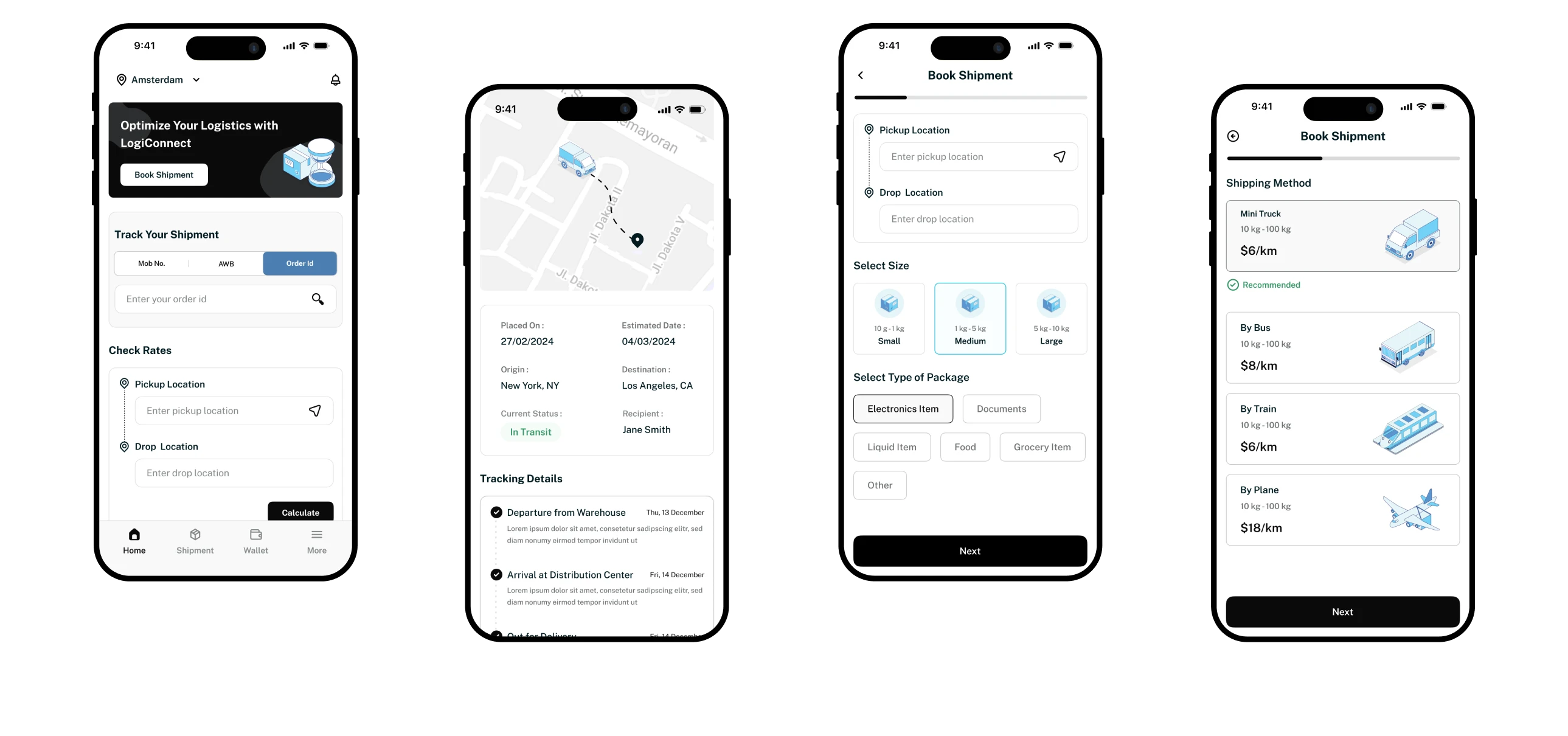
Logistics app screens showing shipment tracking, pickup and drop locations, package size selection and shipping method options

The Engineering Partner You Can Build On

Reliable software requires an experienced team that owns delivery from discovery to release. Here is the track record behind ours.

7+

Years Building Custom Software

90+

Dedicated Team Members

102+

Products Shipped

87+

Clients Served Across 17+ Countries

Trusted by Startups and Enterprises Worldwide

success speaks louder

Watch How We Make a Difference

Frame 01 / 04

Custom Software Solution Development / Driver Dashboard & Invoice Automation for Food Service Company

SolGuruz has delivered a solution that has reduced 90% of manual efforts through automation and provided real-time insights for supplier fulfillment and order volume trends. The team is responsive to requests and changes, and their proactive approach to problem-solving has stood out.

Summarized from Gary Boyd's Clutch review

Gary Boyd

CEO and Owner, Tasty Food Guys | Florida, USA

Read Clutch Verified Review
Tasty Food Guys

SolGuruz is Rated by Real People on Google and Clutch

SolGuruz Google Reviews
5.0

Rated 5.0 / 5 on Google by clients, partners, and visitors who have experienced SolGuruz first-hand - through our work, our office, or our team.

Read Google reviews →
SolGuruz Clutch Reviews
4.9

4.9 / 5 on Clutch - independently audited reviews from real clients who have shipped products with SolGuruz.

Read Clutch Reviews →

Backed by independent accreditations

Logistics software development

What Is Logistics Software Development?

Logistics software development is the process of building custom systems that plan, execute, and record the movement of goods. It covers load planning, warehouse control, fleet monitoring, delivery execution, and freight documentation. Unlike a licensed product, custom logistics software is shaped around your network rather than the average of everyone else's. Choosing a logistics software development company is really a decision about who understands your handoffs, not who has the longest feature list.

Most logistics businesses do not arrive here with a software problem. They arrive with a handoff problem. Dispatch phones a driver, the warehouse updates a sheet, finance chases paperwork, and the customer emails asking where their load is. Each handoff is a place where information goes missing.

OUR SERVICES

Our Logistics Software Development Services

These are the logistics software development services we deliver, from the first scoping call through to a live platform running on real freight.

Start With the System That Matters Most

Tell us where your operation slows down, and we will help define the right first build.

Types of Logistics Software We Build

Logistics and supply chain software rarely breaks in one place. It breaks between dispatch and the warehouse, between the warehouse and finance, and between the driver and the customer waiting at the door.

Supply Chain Management Software

One shipment is easy to watch. Two hundred across four carriers and six sites is where most operations go blind, so custom supply chain software development starts with live visibility. On-time performance by lane, cost per shipment, dwell time and stock position all report in one view. Delay signals surface hours before a customer complains, and the same platform extends into demand planning, procurement and supplier portals as your network grows.

Transportation Management System (TMS)

A custom transportation management system plans loads, assigns carriers and tracks freight from pickup through delivery inside one platform. Your lane rules, tender logic and milestone triggers sit in the build itself, with backend development carrying the shipment volume underneath. Planners stop working around software designed for someone else's freight.

Warehouse Management System (WMS)

Receiving, putaway, picking and dispatch run off one source of truth instead of a clipboard and a spreadsheet. Forklifts, racking, conveyors and scanning hardware sit in a separate register through asset management software development, so equipment servicing never gets mixed into stock records. Bin-level mapping plus barcode and RFID scanning hold accuracy steady, and a 3PL warehouse management system carries per-account rules so each client's numbers stay separate. Our custom warehouse management system development covers the full build.

Fleet Management Software (FMS)

Custom fleet management software holds trucks, drivers and service schedules in one place instead of three systems. Driver records, inspections and insurance documents stay tied to the same vehicle. Telematics already fitted to your trucks feed live location, engine data, and usage hours directly in, so maintenance triggers on real usage rather than a calendar date. License expiry, service intervals and roadworthiness checks flag before they lapse rather than after. Fleets with their own workshop, parts stock and technician schedule can run repairs through a dedicated CMMS, built by our CMMS software development team.

Route Optimization and Dispatch Engine

Custom route optimization software decides which vehicle takes which stops, and in what order. Machine learning models trained on your completed runs set the sequence, instead of a planner with a spreadsheet and a map. Capacity limits, delivery windows, driver skills and live traffic all feed into it, and adding a stop mid-shift reshuffles the run without a full replan.

Last Mile Delivery Platform

Dispatch assigns, drivers execute, and the person waiting at the door watches it happen. Driver apps built through mobile app development hold scans, photos and signatures locally when signal drops in a basement or a rural lane, then sync the second it returns. Failed deliveries, time windows and rider payouts follow rules you set.

Shipment Tracking Software

Shipment tracking software pulls carrier events, telematics pings and scan records into one timeline per consignment, so nobody stitches together three portals to answer one question. Customers get a branded tracking page and automatic status messages instead of an email chain. Exceptions surface to your desk before the customer notices them.

Order Management System (OMS)

An order management system runs the life of an order: what ships, from which location, and who gets told when. Allocation rules decide sourcing across depots based on stock position, service window and cost to serve. Split shipments, backorders and partial fulfilment stay tied to the original order rather than fragmenting across systems.

Inventory Management System

Stock levels, movements and counts sit in one record instead of three spreadsheets. Warehouse inventory management runs on live counts rather than last night's export, so a salesperson never promises stock that left the building yesterday. Cycle counting, stock transfers and reorder triggers follow the thresholds your operation actually runs on.

Freight and Billing Management System

This is the layer where an order becomes freight and freight becomes an invoice, with AI integration reading bills of lading and carrier invoices instead of someone keying them in. Rating, accessorial capture and milestone-triggered billing run in one flow. Freight audit catches overcharges before finance pays them.

ERP With Supply Chain Modules

Some operations want freight, procurement, finance and inventory sitting inside one system of record rather than integrated across several. We build supply chain modules into an existing SAP, Oracle or Dynamics environment, or extend an ERP where the standard module cannot hold your rules. Freight cost then reconciles against the right cost center without a month-end export.

Logistics CRM Integration

Your operations platform knows where every load is. Your sales desk knows which shipper is about to call. We connect the two so a won booking drops into dispatch without re-entry. Building the pipeline, quoting and carrier relationship side sits with custom logistics CRM software development, which handles who you sell to rather than how the load moves.
Ready to Improve Your Logistics Operations?

Share your current process and biggest bottleneck, and we will show you where custom software can help.

Core Features in Every Logistics Platform

Whichever system you start with, these features run underneath every logistics management software build we ship.

Live Shipment and Vehicle Tracking

Position and status pull in from GPS units, telematics devices and carrier APIs, updating one shared record. Nobody phones dispatch for an ETA.

Role-Based Access Control (RBAC)

A driver, a warehouse supervisor, a finance manager and an external client each see a different view of the same data, set per role rather than per person.

Document Capture and Storage

Every file tied to a shipment lives against that shipment: signed paperwork, photos, damage notes and customs records. Nobody hunts through an inbox to find what was signed and when.

Exception Alerting

Rules you set decide what counts as a problem and who hears about it first. A load stalled past its window escalates to a supervisor rather than sitting in a queue nobody checks.

API-First Architecture

Every module exposes clean APIs, so adding a carrier, a client system or a new device does not mean rebuilding what already works.

Offline-Capable Mobile

Not just the driver app. Warehouse scanners, supervisor tablets and inspection devices all hold work locally, so a signal blackspot never stops a shift anywhere in the operation.

Operational Reporting

Every module writes to the same reporting layer, so warehouse, fleet and freight numbers sit in one dashboard instead of three exports that never quite reconcile.

AI Features We Build Into Logistics Management Software

AI belongs in logistics software where it removes a repeated judgment call or reads something a person would otherwise type. We build it for those two reasons.

Document Reading at Volume

Freight invoices, bills of lading and customs forms arrive in every format imaginable. Fields get extracted, matched against the shipment and flagged when they disagree with what was moved.

Demand and Capacity Forecasting

Booking history and seasonal patterns project volume forward by lane and by week, so warehouse space and fleet capacity get planned rather than scrambled for.

Load Matching for Brokers and Forwarders

Available carriers get ranked against a load by lane history, rate pattern and current capacity, so the desk sees a shortlist instead of a spreadsheet.

Damage and Condition Detection

Photos captured at pickup and delivery get compared automatically, so damage claims are settled on evidence rather than argument.

Agentic Operational Workflows

Repeated coordination runs without a person starting it. Carrier chasing, status pushes and escalation paths execute on rules you set, which is where AI agent development services replace the follow-up work a coordinator does by hand all day.

Logistics and Freight Compliance We Build For

Freight is a paperwork business before it is a software business. We treat compliance records as architecture inputs from day one rather than reports bolted on at the end, so what an auditor asks for is already sitting in the system.

Road Freight and Driver Hours

For US road operations, we build to FMCSA and DOT requirements, with ELD Mandate compliance and Hours of Service records captured automatically from telematics rather than entered by hand. Driver logs, inspection reports and violation flags stay audit-ready without anyone rebuilding them after the fact.

Cross-Border and Maritime

We build the documentation trails that customs, port and airline authorities expect. That means C-TPAT cargo security records, AEO status requirements, SOLAS VGM container weight verification, IMO regulations and IATA cargo handling rules. Each one is wired to the freight portals and customs brokers your lanes actually use.

Cargo Security and Traceability

Chain of custody, facility access records and shipment identification are built into the data model, aligned to ISO 28000 supply chain security, TAPA FSR and TSR standards, and GS1 barcoding. Every handoff is logged, so a security review traces a load end to end without a manual reconstruction.

Cold Chain, Hazardous Goods and Data Protection

Temperature records for HACCP, and documentation and handling controls for Dangerous Goods Regulations, are captured continuously rather than sampled. Encryption, role-based access and full audit logging meet GDPR expectations. Delivery runs on ISO 27001:2022 and ISO 9001:2015 certified processes.

Logistics Software Integrations We Build Into Your Platform

New software has to work with what you already run. Every connection below has a specific operational role, and each is designed in during architecture rather than added after launch.

Connection typePlatforms we work withWhat your team gains
Telematics and ELDSamsara, Geotab, Motive, Verizon Connect, raw GPS unitsLive vehicle position, driver hours records and maintenance triggers feed the fleet view without anyone phoning a driver
Carrier and parcel APIsFedEx, UPS, DHL, regional carrier APIsRates, labels and tracking events pull in directly, so nobody switches between six carrier portals
EDI messagingEDI 204, 214, 990, 210 and partner channelsTender, status and invoice messages exchange in the format your partners already use
Mapping and routingGoogle Maps Platform, HERE, MapboxDistance, traffic and geocoding power route sequencing, ETA accuracy and service area checks
Warehouse hardwareBarcode scanners, RFID readers, IoT temperature probes, weighbridgesScans, weights and sensor readings enter the system where the work happens, not at a desk afterward
ERP and accountingSAP, Oracle NetSuite, Microsoft Dynamics, QuickBooks, XeroFreight cost and invoice lines reconcile against operations without a month-end spreadsheet export
Freight portalsINTTRA, Descartes, GT NexusBooking data and documentation stay in sync so partners stop calling your desk for updates
Customer-facing channelsTracking links, SMS, email, customer systems via APIShipment status reaches the customer automatically, which removes most of the calls asking where a load is

Carrier APIs change without warning and EDI partners each interpret the standard differently. A platform connecting to two systems and one connecting to nine are different projects, even when the interface looks identical.

Know Which Integrations Matter First?

Tell us your current systems, and we will map the integrations that will have the biggest operational impact.

Our Logistics Software Development Process

Six stages, shaped around the fact that freight cannot pause for a software launch. Timeline is subject to change based on project scope.

  1. 01 / 06

    Discovery Phase (2-4 weeks)

    We spend time with dispatch, the warehouse floor and finance, mapping what actually happens, including the workarounds nobody wrote down. Contradictions between what two teams believe the process is get surfaced here rather than in month four.

    AI Tools: Claude, Notion AI, Miro
    Deliverables: Operations map, data model, integration audit, compliance brief, scoped module list
  2. 02 / 06

    Architecture and Integration Design (2-3 weeks)

    We design for shipment volume and live tracking load, then confirm every integration point before development opens. Feeds get tested against sandbox environments now, while changing the plan is still cheap.

    AI Tools: Kiro, Claude Code, Postman
    Deliverables: Architecture document, stack specification, integration map, infrastructure plan
  3. 03 / 06

    Interface and Workflow Design (2-4 weeks)

    Logistics screens carry more data per view than most software, and the people using them are usually doing something else at the same time. We design each screen around the job it supports, from a dispatcher assigning loads to a finance manager reconciling invoices.

    AI Tools: Figma, v0, Claude
    Deliverables: Wireframes, clickable prototypes, UI system, approved workflow logic
  4. 04 / 06

    Sprint Development (8-20 weeks)

    Two-week sprints, working software at the end of each. Core modules first, then integrations, then reporting. Every file goes through human review before it merges, using AI-assisted software development inside project-level rule files.

    AI Tools: Claude Code, Cursor, GitHub Copilot, Jira
    Deliverables: Functional modules per sprint, sprint demos, updated backlog
  5. 05 / 06

    Parallel Running and Data Migration (2-4 weeks)

    Old and new systems run side by side on live freight. Historical shipment, carrier and stock records are cleaned and validated before they move, and discrepancies surface while the old system is still there to check against.

    AI Tools: Python, Pandas, Claude Code
    Deliverables: Migration validation report, integration test results, parallel run log
  6. 06 / 06

    Staged Rollout and Ongoing Work

    We go live by depot, region or module rather than switching everything at once. After launch, we watch performance, monitor integration health, and add modules as your network grows.

    AI Tools: GitHub Actions, Datadog, Sentry
    Deliverables: Deployed system, monitoring report, module roadmap, year one support plan

How we engineer

Our AI-Native Engineering Standards

AI-native by practice, engineer-led by principle. These are the rules every SolGuruz team works to, on every project, whatever the stack or industry.

  1. 01Architecture and Design Quality

    • Spec-Driven Requirements

      Engineer-led: Engineers review every spec for feasibility before it’s estimated.

    • Architecture Standards

      Engineer-led: An engineer signs off every architecture decision.

    • Design System and Accessibility

      Engineer-led: Designers own every design decision and its consistency across devices.

  2. 02Code Quality and Security

    • AI-Assisted Development, Human-Owned Code

      Engineer-led: Engineers own the logic and review every AI-generated change.

    • Coding Standards, Git Flow and Peer Review

      Engineer-led: A second developer reviews every change before it merges.

    • Secure and Compliant by Default

      Engineer-led: An engineer owns every security review.

  3. 03Testing and Release Safety

    • AI-Generated Tests and Manual QA

      Engineer-led: QA engineers test the real user flows by hand before every release.

    • Static Analysis and CI/CD Pipelines

      Engineer-led: Engineers set the quality gates the pipeline enforces and fix what the scans flag.

    • Release Safety

      Engineer-led: Engineers review release metrics before each rollout phase.

  4. 04Reliability and Ownership

    • Observability

      Engineer-led: Engineers act on every alert and track trends for the life of the product.

    • Data-Driven Iteration

      Engineer-led: Engineers turn analytics into the backlog for each release.

    • Documentation, Ownership and Ongoing Support

      Engineer-led: You get full repository access and IP ownership, and one in-house team stays accountable for the outcome.

What Does Custom Logistics Software Development Cost?

Scope drives the number more than anything else. Here is where most logistics builds land.

Build tierWhat it coversCost range
Focused single moduleOne system such as a driver app, route planner or tracking portal$25,000-$35,000
Mid-complexity platformTwo or three connected modules with carrier and ERP integration$35,000-$120,000
Enterprise logistics platformFull TMS or WMS, multi-site, deep integrations, compliance architecture$120,000+

Custom logistics software development with SolGuruz starts at $25,000. What a logistics software development company quotes depends on module count and integration depth more than anything else.

See What Your Build Would Cost

Send your shipment volume and current systems, and we will come back with a range you can take into a budget meeting.

Industries We Have Built Logistics Software For

SolGuruz builds logistics software for businesses that move product every day. Whatever your sector, the approach stays the same: built around your operation, not a generic template.

  • Mining and Resources

    We build mining asset management software that tracks production equipment, material movements, consumables, and contractor activity. Haul truck movements, load counts, and cycle records feed the same system that tracks contractor transport to railhead, port, or customer. Spare parts and consumables arriving on site get booked against the equipment, so procurement and maintenance planning work from one record. Features include weighbridge capture against each consignment, haul truck load reconciliation, and contractor settlement from recorded loads.

  • Healthcare and Pharmaceutical Distribution

    We build pharma supply chain software for medicine distributors that require signed proof of delivery at every handover, with recipient name, license verification and timestamp captured against the consignment. SolGuruz makes systems that support batch and expiry tracking, controlled substance records, and continuous cold chain monitoring.

  • Manufacturing and Industrial

    SolGuruz designs manufacturing logistics software that supports supplier ASN tracking against production plans, inbound dock scheduling, and plant-to-distribution-center movement. Production machinery and plant equipment sit in a separate register, so freight cost and equipment cost never get confused. With ERP integration to SAP, Oracle or NetSuite, freight cost reconciles against the right production run without a manual export.

  • Third-Party Logistics (3PL)

    For 3PL providers, we build custom 3PL logistics software that supports per-client storage rules, separate reporting formats, and account-specific billing triggers. These solutions often include client-facing portals showing only their own stock, plus activity-based billing calculated from recorded warehouse events rather than month-end reconstruction.
  • Ecommerce and Retail

    We develop ecommerce logistics software for retail and online sellers that handles rate shopping across carriers, unified order tracking, and returns processing from collection through restocking. With SolGuruz, you get store and warehouse inventory synced in real time, so stock levels stay accurate across every sales channel.

  • Fast Moving Consumer Goods (FMCG)

    We build FMCG distribution software for high-volume operations that need van sales reconciliation, direct store delivery scheduling, and promotional or batch tracking through the chain. Features include end-of-shift driver settlement, short-dated stock returns, and route density planning across hundreds of daily drops.

  • Food and Beverage

    We develop food distribution software that supports expiry-based picking, narrow receiving window scheduling, and temperature capture per consignment. SolGuruz built a driver dashboard and invoice automation platform for a food service distributor that removed 90% of manual effort across their delivery operation.

  • Wholesale and B2B Distribution

    For wholesalers and trade distributors, we build distribution management software that handles multi-depot stock positioning, order consolidation, and account-specific pricing. These solutions often include demand-based stock transfers between regions, enforced order cut-offs, and delivery day scheduling per trade customer.

  • Automotive and Spare Parts

    We create parts distribution systems for dealer networks that need multi-location stock visibility, intelligent order routing, and warranty return tracking. Features include fulfillment from whichever location holds the part, inbound supplier coordination, and returns managed alongside forward freight in one system.

  • Diamond, Jewellery and High-Value Goods

    We develop B2B trading and distribution platforms for high-value goods that centralize certification records, grading data and provenance against each item. With SolGuruz, you get inventory synced directly to client ERP systems, logged handovers at every leg, and verification steps built into secure courier handoffs.

  • Hospitality and Multi-Property Operations

    We build receiving and distribution systems for hotel groups and multi-site venues that manage inbound deliveries against purchase orders, transfers between properties, and par-level replenishment per site. Features include dock scheduling across categories and consumption reporting for central procurement.

The Tech Stack Behind Your Logistics Platform

We build on frameworks that hold up under shipment volume, live tracking loads and continuous integration traffic.

  • Claude Code
  • GitHub Copilot
  • Cursor
  • Windsurf
  • v0
  • Gemini
  • Codex
  • Banani
  • Figma Make
  • Uizard
  • Pencil Dev
  • Stitch
  • Kiro
  • Antigravity
  • User-doc
  • Miro AI
  • Whimsical AI
  • Flutter
  • Android
  • Apple
  • React Native
  • TypeScript
  • JavaScript
  • ReactJs
  • Electron
  • Angular
  • WordPress
  • Webflow
  • FlutterFlow
  • Java
  • PHP
  • Node.js
  • Python
  • Laravel
  • Django
  • FastAPI
  • Flask
  • Nestjs
  • Feathersjs
  • Strapi
  • Netlify
  • Contentful
  • Storyblok
  • Butter CMS
  • Directus
  • TensorFlow
  • PyTorch
  • OpenCV
  • Hugging Face
  • Kaggle
  • OpenAI
  • Anthropic
  • Ollama
  • Claude
  • Voiceflow
  • Vapi AI
  • Perplexity.Ai
  • Stable Diffusion
  • CrewAI
  • N8n
  • Langflow
  • Keras
  • LangChain
  • Google Colab
  • Rasa
  • Llama 4
  • PaLM 2
  • MYSQL
  • AmazonDynamoDB
  • Firebase
  • Firestore
  • Supabase
  • PostgreSQL
  • Oracle
  • Redis
  • MongoDB
  • Cassandra
  • Elasticsearch
  • Pinecone
  • Pgvector
  • Weaviate
  • AWS
  • Digital Ocean
  • Google Cloud
  • Twilio
  • Docker
  • Kubernetes
  • Azure
  • Mocha
  • JMeter
  • Appium
  • SoupUI
  • Jest
  • Maven
  • Test NG
  • Selenium
  • Cucumber
  • Postman
  • Cypress
  • Rest-Assured
  • TravisCI
  • CircleCI
  • Gradle
  • Jenkins
  • Github-Actions
  • Bitbucket-Pipelines
  • Gitlab CI/CD
  • SonarQube
  • Grafana
  • Codemagic
  • Terraform
  • Bamboo
  • Vercel
  • GitLab
  • Git
  • Github Actions
  • Nginx
  • PM2

Why Choose SolGuruz for Custom Logistics Software Development

Most people evaluating a logistics software development company are comparing feature lists. We build systems your dispatchers, drivers and warehouse staff actually keep using after go-live.

  • Operations-First Discovery

    We start by understanding how freight actually moves through your operation, from dispatch to the warehouse floor to finance, including the workarounds nobody wrote down. Then we build software that fits how your team already works, not how a product vendor assumed they should. It is a big reason 80% of our clients come back and 70% refer us.
  • Compliance and Security by Design

    In freight, compliance records are an architecture input, not a report at the end. We build to comply from day one: FMCSA, DOT and ELD Mandate for road operations, C-TPAT and SOLAS VGM for cross-border, encryption and audit logging throughout. ISO 27001 and ISO 9001 certified delivery sits behind all of it.
  • Fast and Flexible Delivery

    We follow a proven, well-tested delivery process and use AI-assisted development to move faster without cutting corners, with a 99.9% delivery rate behind it. You get regular check-ins and working software at every step, so priorities can change without derailing the build.
  • Experienced Logistics Engineers

    You work with engineers, designers and QA who have shipped real operations software, from driver dashboards and dispatch systems to supply chain platforms. They are part of a team that has delivered 102+ products across 14 industries. Operations that want engineers inside their own sprint cycle can hire dedicated developers from the same team instead.
  • Easy and Transparent Process

    No black boxes. You get clear scope and estimates up front, decisions documented as we go, and a clean handover of code and knowledge at the end. You own everything from the first commit.
Know What Your Logistics Software Will Take Before You Build

Share your operation, current systems, and key challenges. We will outline the right features, integrations, timeline, and estimated cost for your project.

our success stories

Software Projects We Have Delivered for Businesses

From logistics platforms to AI-assisted software development, we have delivered software across industries. Here are some of our recent projects.

  • Supply Chain Management App Solutions

    Supply Chain Management App Solutions

    SolGuruz's Supply Chain Management Case Study demonstrates substantial improvements in logistics and inventory strategies for a tech firm.

    Key Outcomes

    6+ Month
    Delivery Timeline
    B2B + B2C
    in One Platform
    ELD
    Driver Safety & Compliance
    5 Layers
    Encryption, OAuth 2.0, AWS
  • HotelGuruz: CMMS Software Delivered in 45 Days - Live on App Store & Google Play

    HotelGuruz: CMMS Software Delivered in 45 Days - Live on App Store & Google Play

    HotelGuruz Redefines Hotel Operations with a CMMS Solution that Simplifies Maintenance, Asset Management, Reduces Costs & Unites Hotel Teams under One Centralized Platform.

    Key Outcomes

    45-Day
    Delivery Timeline
    $180-$350
    Saved Per Room / Year
    iOS + Android
    Native Apps
    Hospitality
    CMMS Platform
  • Diamond B2B Portal and Diamond CRM Development

    B2B Diamond CRM Portal With ERP Synchronisation

    Gem is a B2B diamond trading portal with inventory sync to client ERP systems, 4 platforms (web, mobile, backend, cloud), and enterprise security.

    Key Outcomes

    6+ Month
    Delivery Timeline
    4 Platforms
    Web, Mobile, Backend, Cloud
    ERP Sync
    Inventory Synced with Client ERP
    B2B
    Diamond Trading
  • Event Management, Event Ticketing & Booking Platform

    Event Management, Event Ticketing & Booking Platform

    Discover how SolGuruz developed Event Hub, a comprehensive platform that simplifies event planning, ticket sales, and bookings, enhancing user experience and operational efficiency for event organizers and attendees.

    Key Outcomes

    4 Platforms
    iOS, Android, Web, Admin Panel
    5 Layers
    Encryption, OAuth 2.0, AWS

What Our Clients Say

Explore the latest reviews from our existing clients to get a better picture of our services and collaboration.

Clutch Fall Champion 2024
Clutch Global Award Fall 2024
Top Clutch Nextjs Developer 2023 Award
Most Reviewed App Development Company
Top App Development Company on appFutura
Food & Beverage

Custom Software Solution Development / Driver Dashboard & Invoice Automation for Food Service Company

SolGuruz has delivered a solution that has reduced 90% of manual efforts through automation and provided real-time insights for supplier fulfillment and order volume trends. The team is responsive to requests and changes, and their proactive approach to problem-solving has stood out.

Summarized from Gary Boyd's Clutch review

Gary Boyd, CEO, Tasty Food Guys

United StatesLake Worth Beach, Florida, United States

Jan. 2025 - Ongoing
Automotive

Custom Google Inventory Feed Solutions for Car Dealership Company

Thanks to SolGuruz, the client became one of the first businesses in their location to implement Google shopping ads for vehicles. The team managed the engagement well and was highly flexible in terms of communication. They were also helpful and offered unique services that others didn't provide.

Viral review for SolGuruz

Summarized from Viral Kathiriya's Clutch review

Viral Kathiriya, Sr. Digital Mktg & CRM Analyst, Car Dealership Company

Manitoba client review for SolGuruzWinnipeg, Manitoba, Canada

Jan. 2023 - Mar. 2023
Diamond & Jewelry

Web Development for Diamond Wholesaler

The client got exactly what they needed, leaving them completely pleased with SolGuruz's services. The team instituted a smooth workflow by being highly attentive to the client's needs. Moreover, the team boasted exceptional communication skills and was always willing to lend a helping hand.

From the verified Clutch review by

Business Development Manager, Diamond Wholesaler

South AfricaCape Town, South Africa

Jul. 2023 - Aug. 2023

Expert Insights on Logistics Software Development

Guides, costs, and trends on building logistics and supply chain software, from the SolGuruz team.

View All Blogs
Have a Logistics Software Project in Mind?

Share your requirements and get a clear scope, integration plan, timeline, and cost estimate for your logistics software.

Frequently Asked Questions

Quick answers to the questions our clients and prospects ask most. If yours is not here, our team is one click away.

Jay Nandwana Technical Business Consultant at SolGuruz

Jay NandwanaSenior Technical Business Consultant

Need advice tailored to your project?

FAQs cover the common ground. For decisions specific to your tech stack, timeline, and team, talk to Jay and the team, who have shipped what you are planning.

A focused single module runs $25,000 to $35,000. A mid-complexity platform with integrations runs $35,000 to $120,000. Full enterprise TMS or WMS builds start near $120,000 and scale with integration depth.

Module count and integration depth set the base. Compliance requirements, offline mobile capability, the number of user roles and any data migration from an existing system each add to it. Regional developer rates then move the total.

A single module takes 2 to 4 months. A mid-size platform with integrations takes 4 to 7 months. Enterprise builds with compliance architecture run 8 to 12 months from operations walkthrough to staged rollout.

A logistics software development company builds systems that plan, execute and record freight movement. That covers transportation management, warehouse control, fleet monitoring, route planning and the integrations tying them to tools you already run.

Logistics software runs execution: moving, storing and delivering goods. Supply chain management software covers the wider picture including sourcing, demand planning and supplier performance. Most operations build the execution layer first.

Yes. Supply chain software development services cover visibility platforms, inventory and order management, ERP supply chain modules and analytics across sites, alongside the transport and warehouse layers.

Both sit inside logistics management software. A transportation management system handles goods in motion: load planning, carrier booking and shipment tracking. A warehouse management system handles goods at rest: receiving, storage, picking and stock accuracy.

Yes. Vehicle fleet management software runs as a standalone build or inside a wider platform, holding trucks, drivers and service schedules in one record. Telematics feeds usage hours, so maintenance triggers on real mileage rather than a calendar date.

We deliver logistics and supply chain software for operations across the USA, Europe, the UK and Australia. Cross-border lanes like the Blue Banana corridor hit several regulatory regimes in one week, so compliance records track per country rather than per depot.

Yes. Transportation software development services cover load planning, carrier assignment and shipment tracking as a standalone build. You can leave out the warehouse and inventory layers if that is the only gap in your operation.

Yes. Logistics automation software development connects your current ERP, TMS and WMS, so orders, bookings and paperwork move between them on rules you set. We replace a system only when it blocks the data those rules depend on.

Yes. As a logistics app development company we handle logistics mobile app development for driver and scanner apps. These hold job cards, scans and signatures on the device, syncing when signal returns.

Yes. Old and new run in parallel on live freight behind an API layer, then cut over by depot or region. Nothing switches off until the replacement is proven on real loads.

Yes. Logistics software integration covers EDI 204, 214, 990 and 210 message sets, direct APIs from FedEx, UPS and DHL, plus freight portals including INTTRA and Descartes.

FMCSA, DOT and ELD requirements for US road freight, plus C-TPAT, SOLAS VGM and IATA rules for cross-border. Encryption, role-based access and audit logging are standard, with delivery on ISO 27001:2022 and ISO 9001:2015 certified processes.